

How to Choose the Best Hotel Booking Engine for Your Business
In today’s digital world travelers are increasingly booking their stay online. No doubt online travel agencies are really prominent but there is a growing focus among hoteliers on direct bookings and that’s for a good reason. A hotel booking engine Is actually a software that is built in your hotel’s website. It allows your guests to check room availability and book directly with you without needing to go through any third-party website. It plays a very important role in converting your website visitors into paying guests.
Direct bookings are really important as they promise you higher profits and no hefty commissions. You control communication and experience early. Your guests can interact with your brand directly, not another company’s platform. The objective of the blog is to just provide you with how to choose the right hotel booking software.

Understanding your hotel’s needs
Before jumping into the software comparisons it’s very important for you to understand the specific needs of your hotel. The right booking engine for one property might not suit another.
-
Know your property
Start by understanding what kind of property you run: boutique hotel or guesthouse, large chain or a resort? Then you need to consider the size of your property. How many rooms do you have? Do you offer different types of rooms? Understanding your target audience is all about understanding are you catering to business travelers or families? Do your guests value luxury or affordability?
-
Define your goals
What do you want the Hotel Booking System to actually help you with? Do you want to increase their bookings by 20%? Reduce dependency on OS? Or just improve your guest satisfaction with the smooth booking process. All you need to do is write down your three top objectives. These will help you prioritize all features later.
-
Understand your technical capabilities
take a realistic look at what resources you have. Do you have IT support or will you need something super user-friendly? What’s your budget upfront and ongoing? Can your team handle training and onboarding or should the setup plug and play? Understanding all your limitations helps prevent surprises down the line.
Essential features to look for in Hotel Booking Software
1. User friendly interface
The hotel booking engine you choose to install must be simple and very clear for both your guests and your staff. The booking process for your guests should be quick and mobile friendly. For your staff updating availability prices and offers should be really easy. Mobile responsiveness it’s very important. A lot of guests today use smartphones so your engine must work flawlessly on all the screen sizes.
2. Real time availability and instant confirmation
your guests should see accurate room availability. Once they book they should get a confirmation email immediately. There should be no waiting or confusion. This can help you build trust and prevent overbookings.
3. Secure payment gateway integration
A reliable Hotel Booking System should accept multiple payment methods credit card debit card or digital wallets. You need to ensure it meets all the standards to protect sensitive guest information.
4. Customisation and branding
Your Hotel Booking Software should blend easily in your website. We need to use our hotels logos colors and branding and avoid jarring transitions or redirects to another website. This will keep your guest on your domain and also improve trust and conversion rates.
5. Mobile optimization
We cannot stress this enough that your booking engine must work beautifully on all mobile devices. The layout should adapt smoothly for different phones and tablets.
6. Rate management and flexibility
Good engines allow you to set different rates for promotions seasons or even corporate guests. It will make it very easy for you to offer dynamic pricing to maximize revenue. Support multiple currencies if you cater to international Target audiences.
7. Inventory management
Keeping room availability current is very important. Your engine must make it easy for you to quickly block or release rooms, avoid double bookings and sync with your PMS.
8. Promotions and upselling
Do you offer discounts or promo codes? Choose a booking engine that supports your special offers add-ons like breakfast or parking. It must also include upsell tools during the booking process.
9. Multi language and multi currency support
If you want to attract international guests it’s very important for you to look for an engine that supports multiple languages and automatically displays prices in guests currency.
10. Guest communication tools
Good communication builds loyalty. So you need to look for an engine that can easily send automated pre arrival emails or trigger post stays surveys or just thank you notes.
Read More: What is a Hotel Booking Engine and How Does It Work?
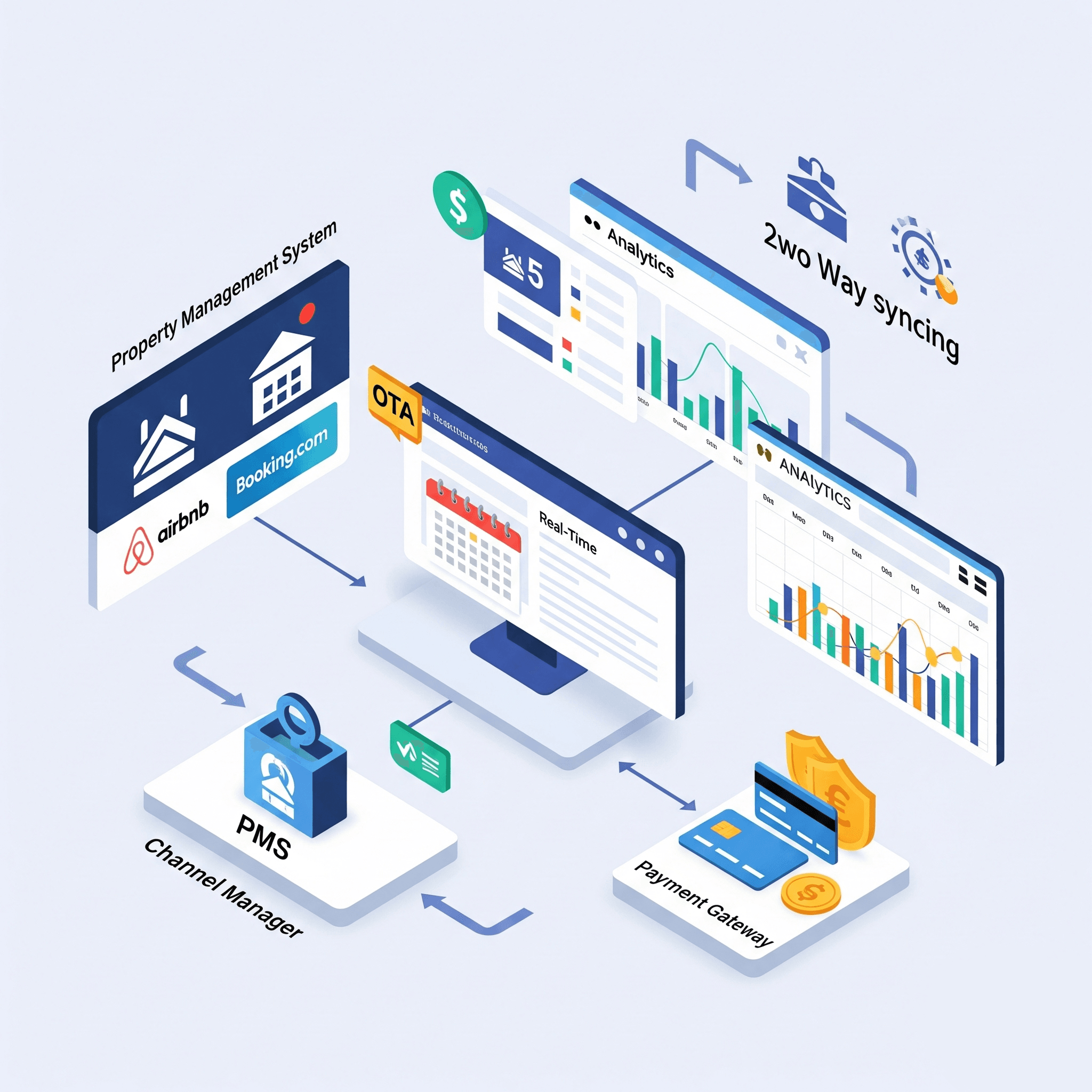
Creations for seamless operations
-
Property management system
A two way integration with your property management system ensures that your booking updates automatically for your guests. Guests can easily sync across platforms. There should be no manual data entry so fewer errors and time saved.
-
Channel manager
This syncs your room inventory and prices across different OTAs like Airbnb. When your room is booked directly it disappears from other channels automatically and it’s also vice versa.
-
Website integration
Your hotel booking engine should easily embed in your website. You can just use some simple widgets and others also provide APIs for deeper customisation.
-
Analytics and reporting
Track what’s working with inbuilt dashboards or Google Analytics interaction. You can monitor conversion rates, see popular room types and understand where your guests are coming from.
-
Payment gateway
Reinforcing the importance of security and flexibility. You need to make sure that your guests’ expectations of regulatory needs are met with different payment options.
The implementation process
Even the best Hotel Booking System won’t help you if it’s not set up properly.
- If you’re switching from another engine data like guest is to an availability might need to be transferred.
- You need to set up room types, pricing , taxes , policies and promotions. Furthermore, you must train your front desk and reservations teams on how to view and manage the bookings. They must know how to handle cancellations or changes and use reporting tools.
- Before going to the live test everything is like how to book a test room and confirm emails are sent. You can also try different devices to ensure your engine is working properly.
- Once live you need to continue to monitor performance and adjust updates on the interface as needed. Remember to get feedback from your guests.
Future trends in Hotel Booking Software
Soon you will see engines offering tailored suggestions based on user behavior similar to Netflix or Amazon smart speakers growing in popularity. Voice booking may soon become a reality. You can expect faster sleeker mobile interfaces and more progressive web app features. Booking engines might even soon tie directly in smart room controls and loyalty apps.
So above all you need to know that choosing the right booking engine is not just a tech decision it is actually a business strategy. A well chosen engine can boost our direct bookings but costs from third party platforms and improve your guest experiences. Just take time to understand your requirements, compare the features and test your options. The right tool can help your hotel stand out in a competitive market. Choose the best tool today from Traveltekpro.
Read More: B2B vs. B2C Hotel Booking Systems: What’s Best for You?
FAQ'S
Related Blogs
Why Travel API Integration Is Critical for Modern OTA Platforms
Why Travel API Integration Is Critical for Modern OTA Platforms The travel industry has changed dramatically over the last few years. Whether someone is booking a last minute business trip or planning a family vacation…
Jul 22, 2026Read More
Get in touch
Email Us
Business@traveltekpro.com"We opted for Traveltekpro to construct and implement our Flight booking system, and I am thoroughly pleased with the outcomes. Their team displays remarkable efficiency, expertise, and utmost professionalism throughout the project."

Arun Neli
Chief Operating Officer
"I had a fantastic experience with Traveltekpro! Their custom booking system designed for our platform is not only sleek and easy to use,but it has also received excellent feedback rom our customers. Kudos to the Traveltekpro team for their outstanding work!"

Benjamin Smith
Product Manager
"Traveltekpro has been a delight to collaborate with on two distinct occasions, showcasing professionalism and expertise. Their team demonstrates a commitment to surpassing expectations and adheringto deadlines."

Kevin Brown
CTO
"We partnered with Traveltekpro for our travel booking platform, and the experience was excellent. The team understood our requirements quickly, delivered on time, and provided great support throughout the project. Highly recommended."

Manish Singh
Director of IT
"Great experience working with Traveltekpro. They were responsive, knowledgeable, and always ready to suggest better solutions. The final product exceeded our expectations, and the after-launch support has been excellent."

Shubham Rawat
Founder & CEO